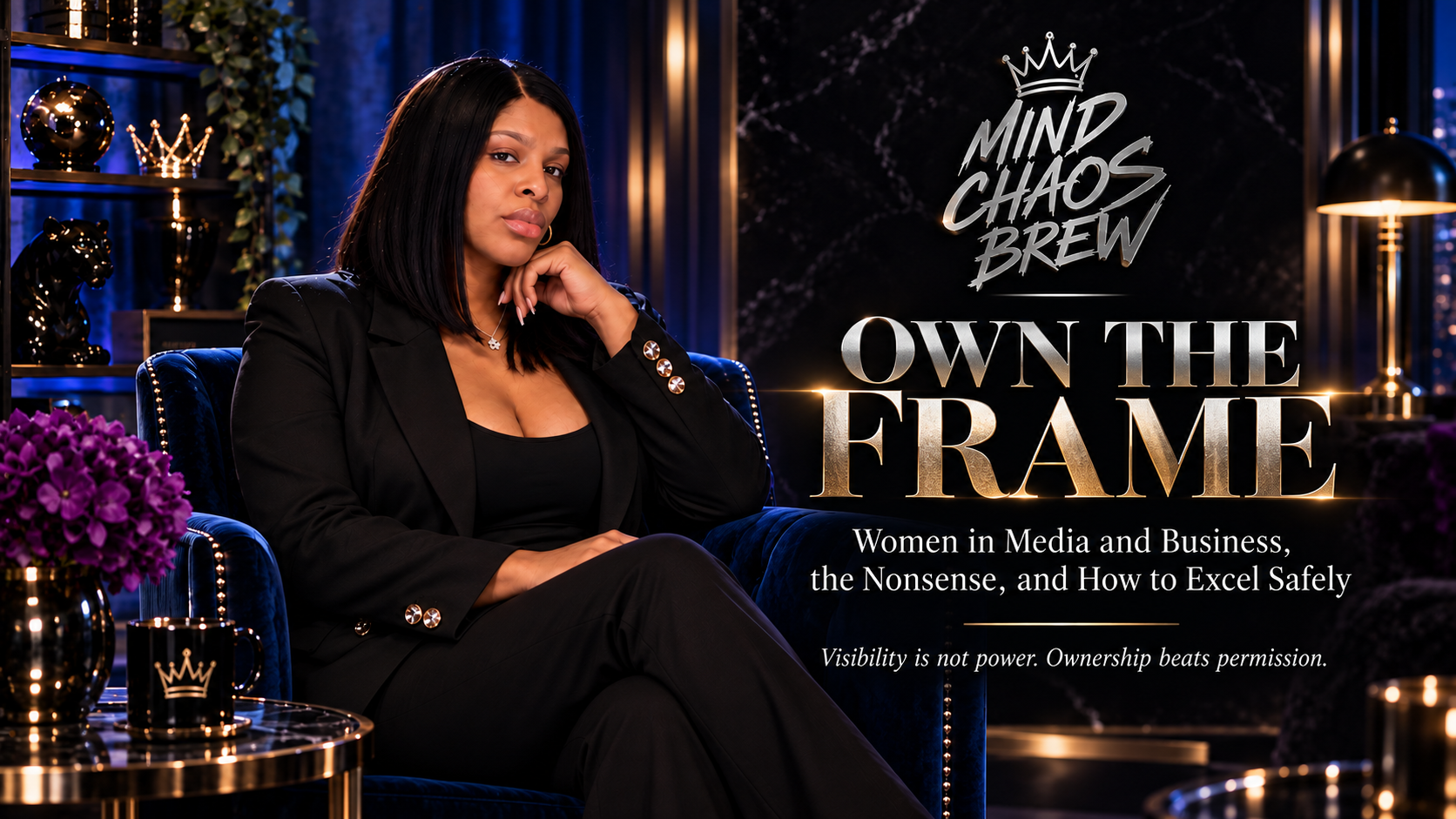
Media and business are not separate worlds. One decides who is seen. The other decides who is paid, promoted, funded, and taken seriously. Women walk through both with the same pattern: you can be visible and still not be powerful. You can be competent and still be treated as optional. You can be invited in and still be expected to carry the room, the feelings, and the fallout.
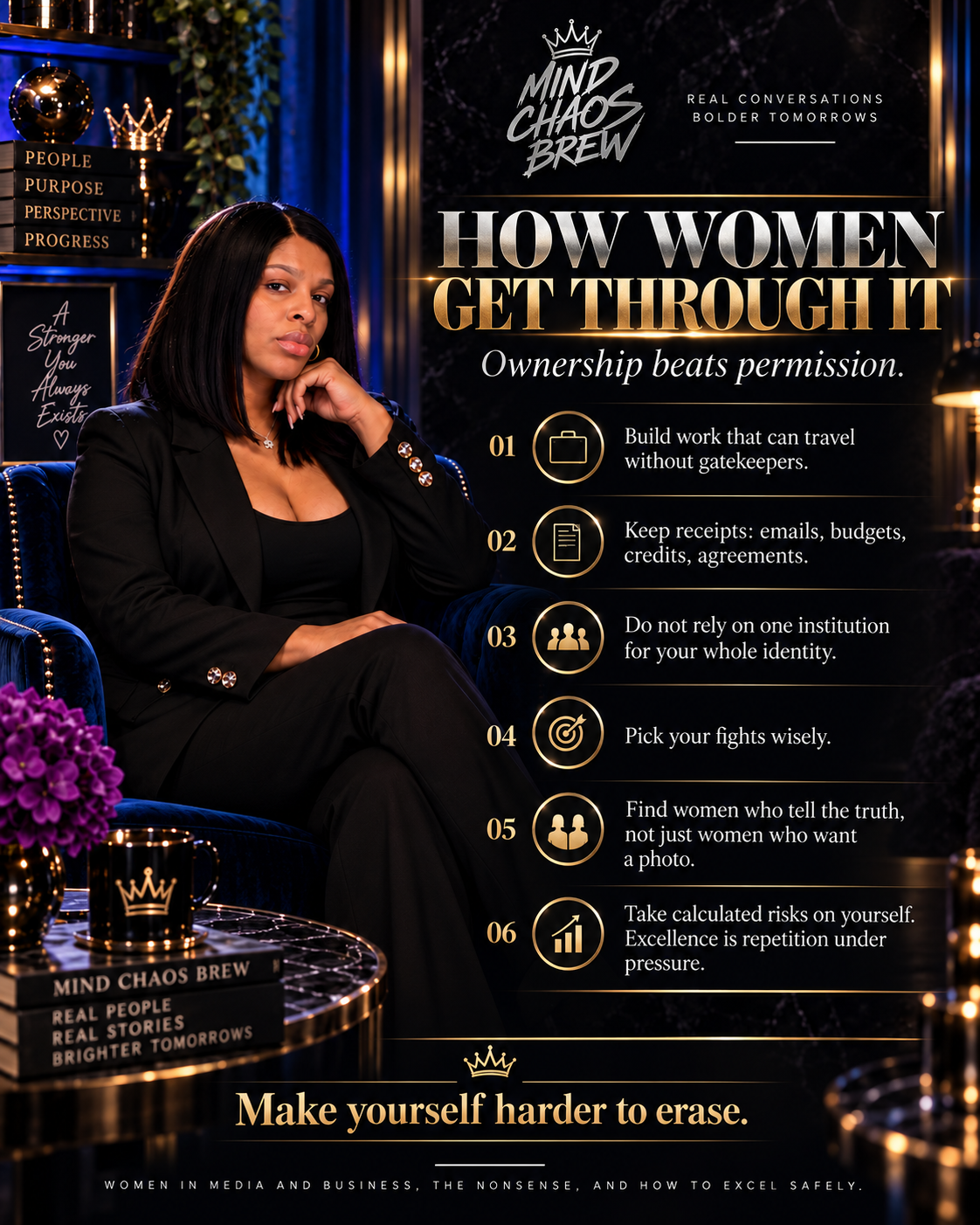
The data is not mysterious. Women represented only 26 percent of news subjects and sources worldwide in the 2025 Global Media Monitoring Project. In the 100 top-grossing films of 2024, girls and women were 33.6 percent of speaking characters, a figure the USC Annenberg Inclusion Initiative says was not significantly different from 2007. Behind the camera, the drop-off remains sharper: women held 23 percent of key behind-the-scenes roles on the 250 top-grossing films of 2025. On broadcast television, women’s share of major behind-the-scenes roles slipped from 31 percent in 2023–24 to 30 percent in 2024–25. Read the source notes from UN Women and the latest research from USC Annenberg and the Center for the Study of Women in Television and Film.
That is the landscape. It is not the sentence.
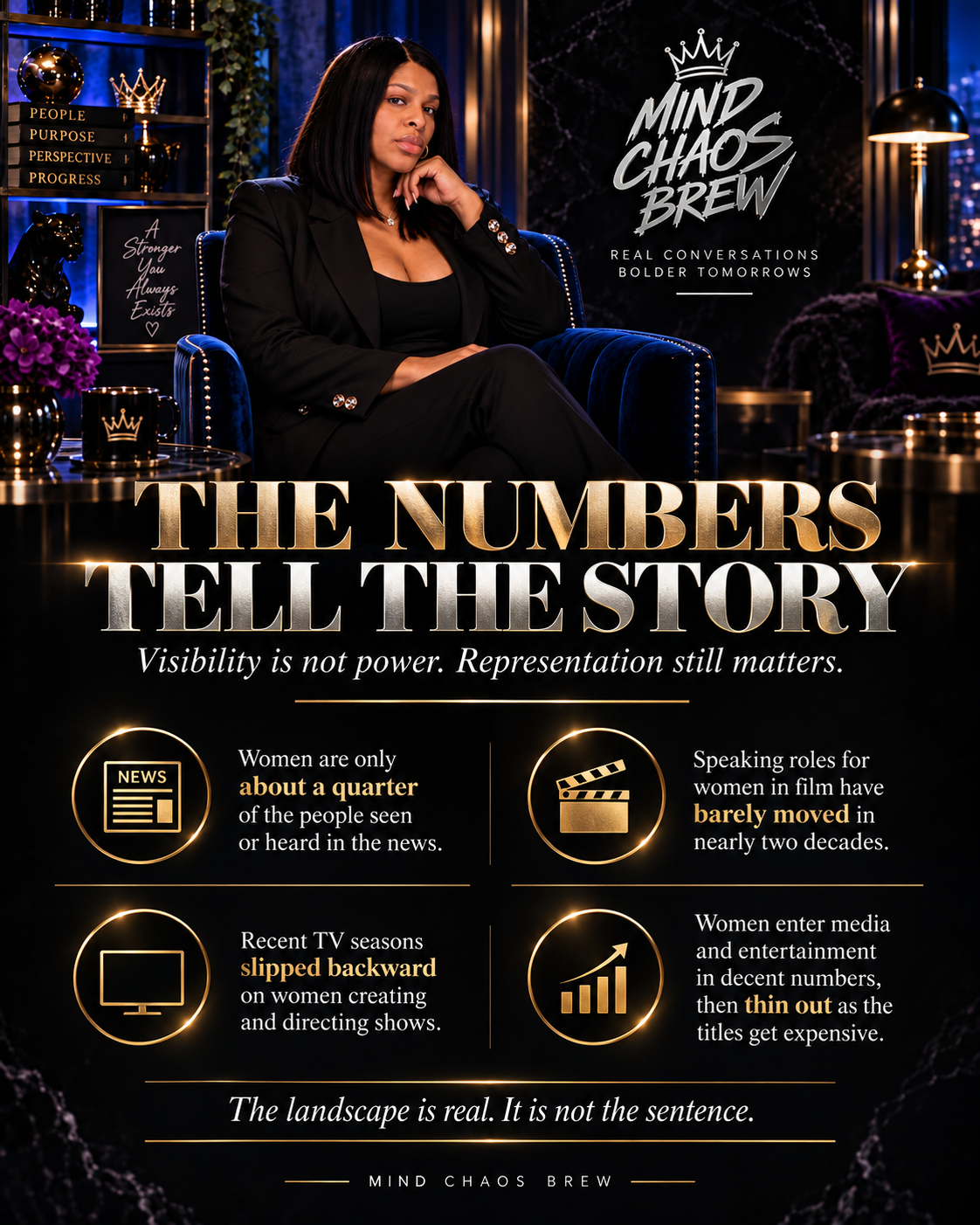
THE STRUGGLES THAT ARE REAL
Some of it is old and ugly. Harassment. Pay gaps that start early and compound. Being steered toward “soft” beats, support roles, HR, makeup, producing for someone else, or customer care while men get the political story, the profit-and-loss responsibility, the director’s chair, or the investor meeting.
Some of it is structural. Short-term contracts. Always-on hours that punish anyone who also has a child, a parent, or a body that needs sleep. Promotion rules that are foggy until a man gets the job. Ageism that treats a woman at 45 as expired and a man at 60 as distinguished. Online abuse that arrives faster than any HR policy.
Some of it is quieter. Being the only woman in the room and getting asked to take notes. Being praised for “presence” instead of the work. Being told you are “difficult” for asking what a man would call due diligence. Being used as proof of inclusion while the budget, the credit, and the sequel go elsewhere.
THE NONSENSE
The nonsense is the extra layer on top of the job.
It is being told there is one correct way to be a woman in the industry: grateful, palatable, endlessly available, never angry, never ambitious in a way that threatens anyone. It is being flattened into a mascot. It is performative programs that photograph well and change nothing about who greenlights the project. It is colleagues who want your labor and your likeness, not your judgment. It is social media that will celebrate you one week and try to ruin you the next. It is people who confuse access with ownership of you.
You do not have to swallow that to succeed. You also do not have to pretend the barriers are imaginary. Both lies waste years.
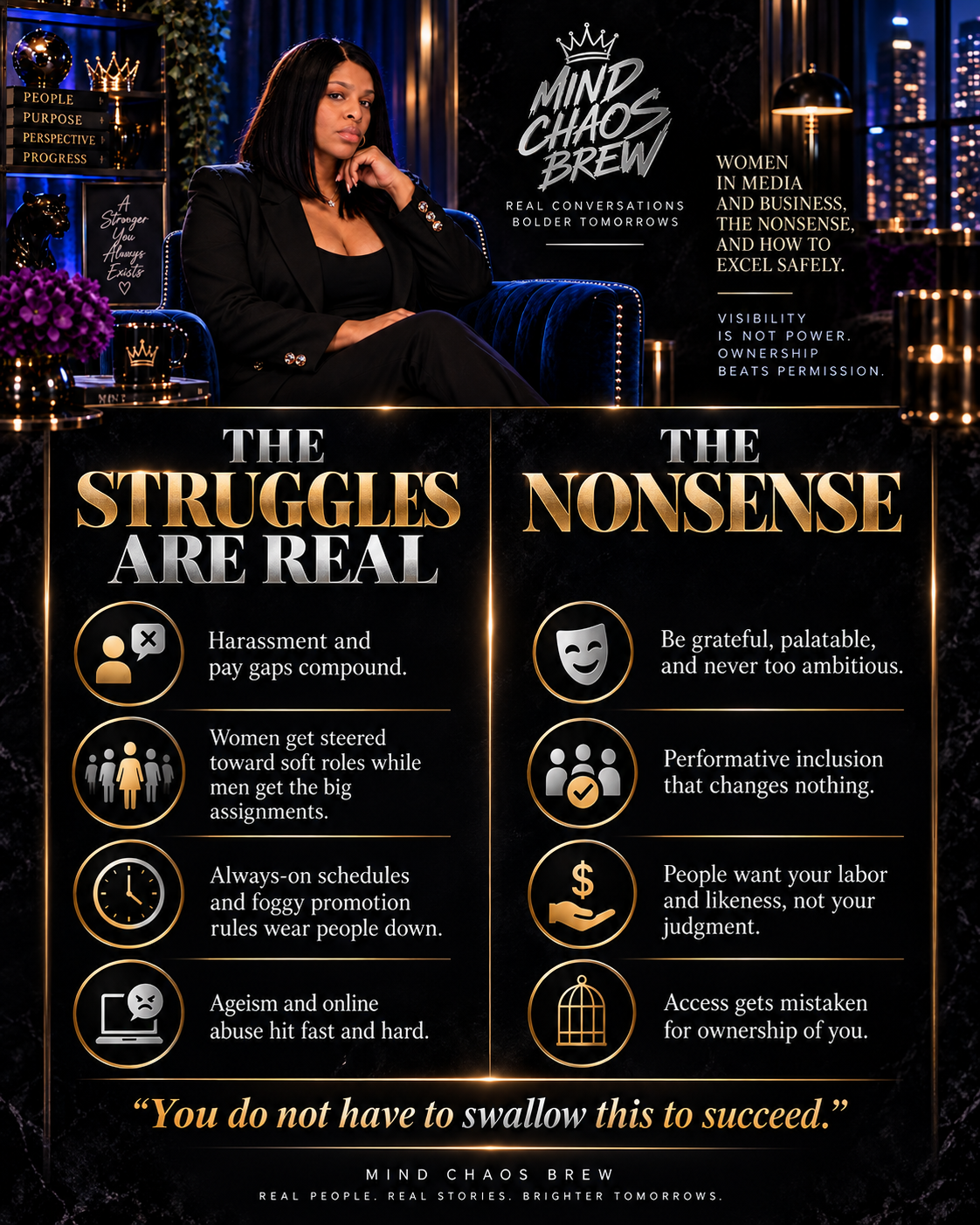
HOW WOMEN ACTUALLY GET THROUGH IT
The women who last rarely wait for the industry to become fair. They do a few unromantic things well.
They build a body of work that can travel without a gatekeeper’s blessing: a show, a book, a company, a newsletter, a production slate, a book of business, or a platform. Ownership beats permission.
They keep receipts. Emails. Budgets. Credits. Who promised what. When the story changes, paper is a friend.
They stop asking one institution to be their whole life. A job can pay you. A brand, a skill set, and a network keep you from being disposable when that job turns.
They pick their fights. Not every slight is worth a campaign. Some are. Knowing the difference is a professional skill.
They find other women who tell the truth, not just women who want a photo. Solidarity that cannot survive a hard conversation is decoration.
They take calculated risks on themselves. A new beat. A company. A public “no.” A move that looks unsafe to people who never had to bet on themselves.
Excellence is not a personality. It is repetition under pressure.
HOW TO GET MENTORSHIP FROM MEN, APPROPRIATELY, AND STAY SAFE
Men still hold a large share of the rooms where money, assignments, and reputations get decided. Ignoring that is not principle. It is self-sabotage. Using that fact without protecting yourself is how people get hurt.
Mentorship is advice, introductions, and honest feedback. Sponsorship is someone using his capital so you get the meeting, the credit, or the budget. You can want both. You should not confuse either one with friendship, romance, rescue, or family.
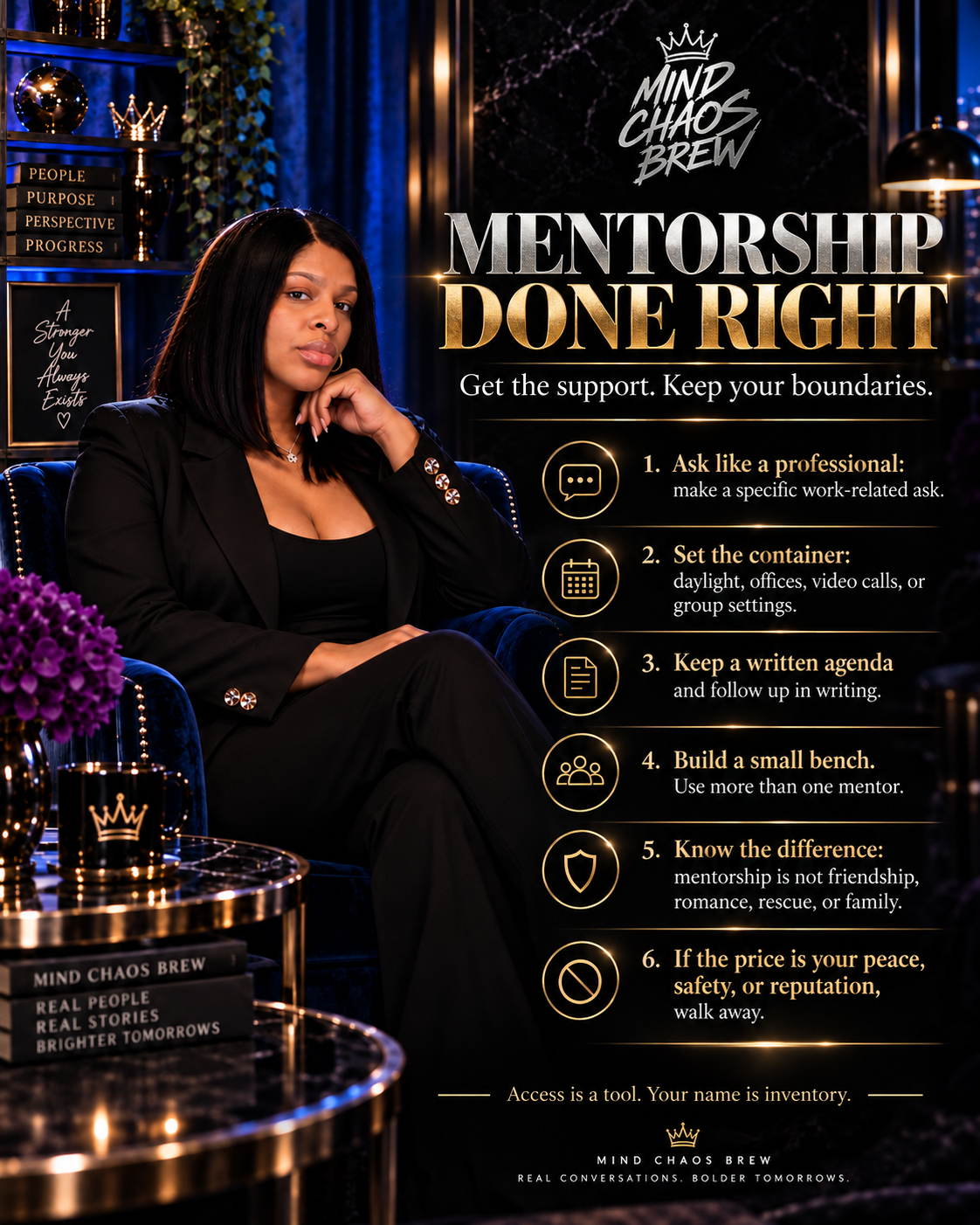
Ask like a professional, not like a petitioner. Do not open with “I need a mentor.” That puts the man in a vague emotional role. Open with a specific ask tied to work.
Set the container before the conversation. Prefer daylight, offices, video calls with a calendar invite, or group settings. Coffee in a public place is fine. Late drinks, hotel bars, “let’s continue this at my place,” and “don’t tell anyone we’re talking” are not mentorship. They are a different category, and you already know which one.
Keep a written agenda. Follow up in writing. That creates a paper trail and keeps the relationship about the work.
Use more than one mentor. A single male mentor with outsized power over your livelihood is a risk even when he is decent. Build a small bench: one operator, one creative, one finance or legal mind, and one peer. No one person should be the door and the key.
Be clear about what you will and will not discuss. Work. Craft. Strategy. Industry maps. Introductions you can repay professionally. Not your marriage. Not your body. Not your trauma as entertainment. Not his marriage. If he steers there, steer back once. If he persists, leave the relationship. You do not owe him a soft landing.
Watch the trade. Healthy mentorship costs you time, preparation, and excellence. Unhealthy mentorship starts costing you secrecy, personal access, flattery, isolation from other women, or “loyalty” that means you cannot take a better opportunity. If the price is your reputation or your peace, it is not mentorship.
Name red flags early. He only wants to meet alone after hours. He comments on your looks, clothes, or “energy.” He badmouths every woman who came before you. He wants you dependent on his introductions. He jokes about what you “owe” him. He tests small boundary crossings to see whether you will laugh them off. He frames concern as “I’m just trying to help you” while ignoring a direct no.
You do not need a courtroom standard to walk away. Discomfort plus a pattern is enough.
Protect the relationship and yourself at the same time. Tell a trusted person when you are taking a meeting. Keep it on the calendar. Do not share home addresses, children’s schools, or private photos “to build trust.” Do not accept career help that is conditional on silence about how it was given. If something crosses a line, write it down the same day: date, time, what was said, and who else was around.
In media and business, your name is inventory. Treat it that way.
Give value without performing gratitude theater. Men who are worth learning from respect competence. Show the work. Apply the advice. Report back with results, not praise. If you can make an introduction, flag a problem early, or make him look accurate because you executed, that is the cleanest reciprocity there is. You are not his project. You are a colleague with less positional power, asking to shorten the learning curve.
COPY, SEND, STAY SAFE
Use these templates as written, then change only the specifics. Keep everything on email or a calendar invite so there is a record.
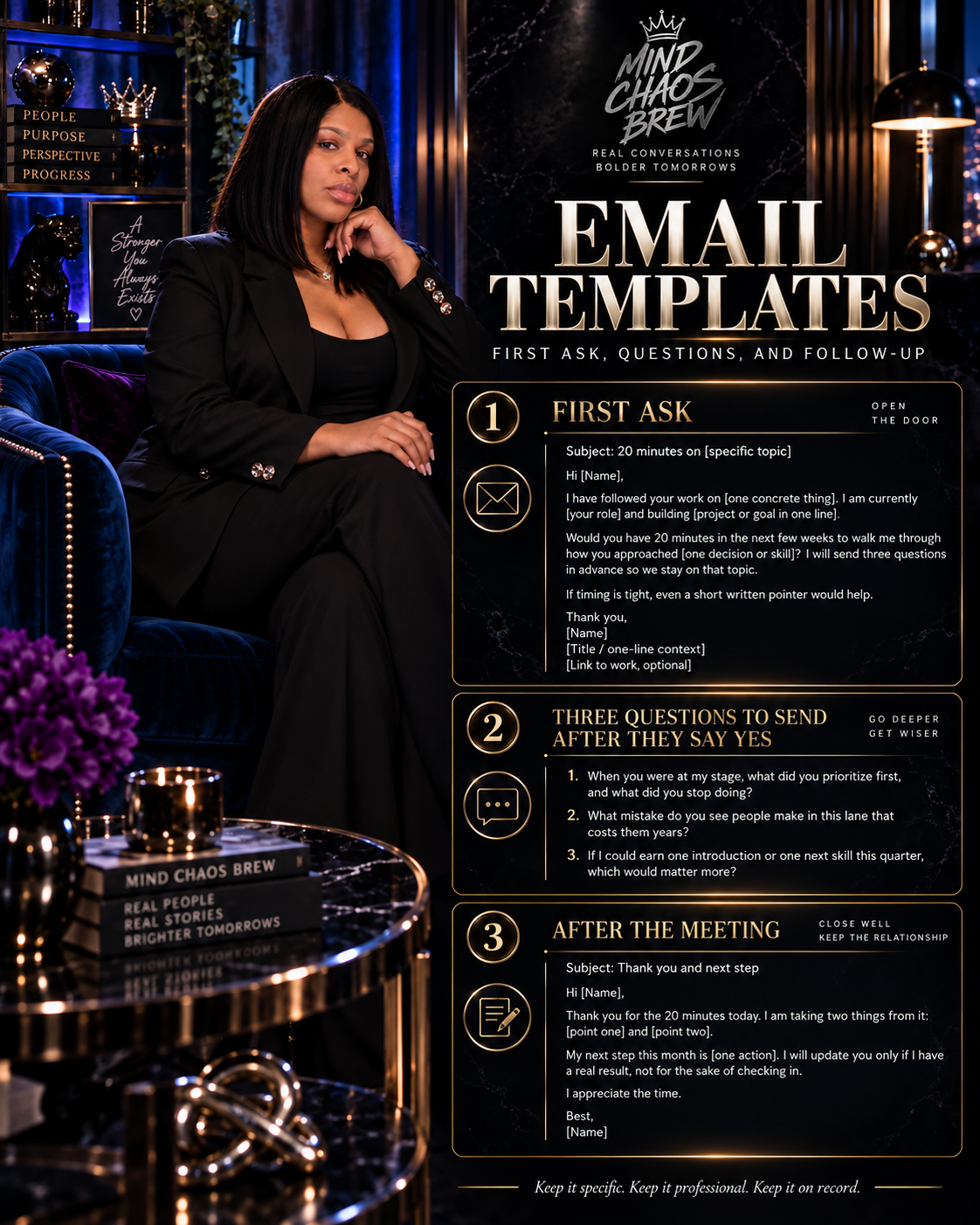
FIRST ASK
Subject: 20 minutes on [specific topic]
Hi [Name],
I have followed your work on [one concrete thing]. I am currently [your role] and building [project or goal in one line].
Would you have 20 minutes in the next few weeks to walk me through how you approached [one decision or skill]? I will send three questions in advance so we stay on that topic.
If timing is tight, even a short written pointer would help.
Thank you,
[Name]
[Title / one-line context]
[Link to work, optional]
THREE QUESTIONS TO SEND AFTER THEY SAY YES
- When you were at my stage, what did you prioritize first, and what did you stop doing?
- What mistake do you see people make in [this lane] that costs them years?
- If I could earn one introduction or one next skill this quarter, which would matter more?
AFTER THE MEETING
Subject: Thank you and next step
Hi [Name],
Thank you for the 20 minutes today. I am taking two things from it: [point one] and [point two].
My next step this month is [one action]. I will update you only if I have a real result, not for the sake of checking in.
I appreciate the time.
Best,
[Name]
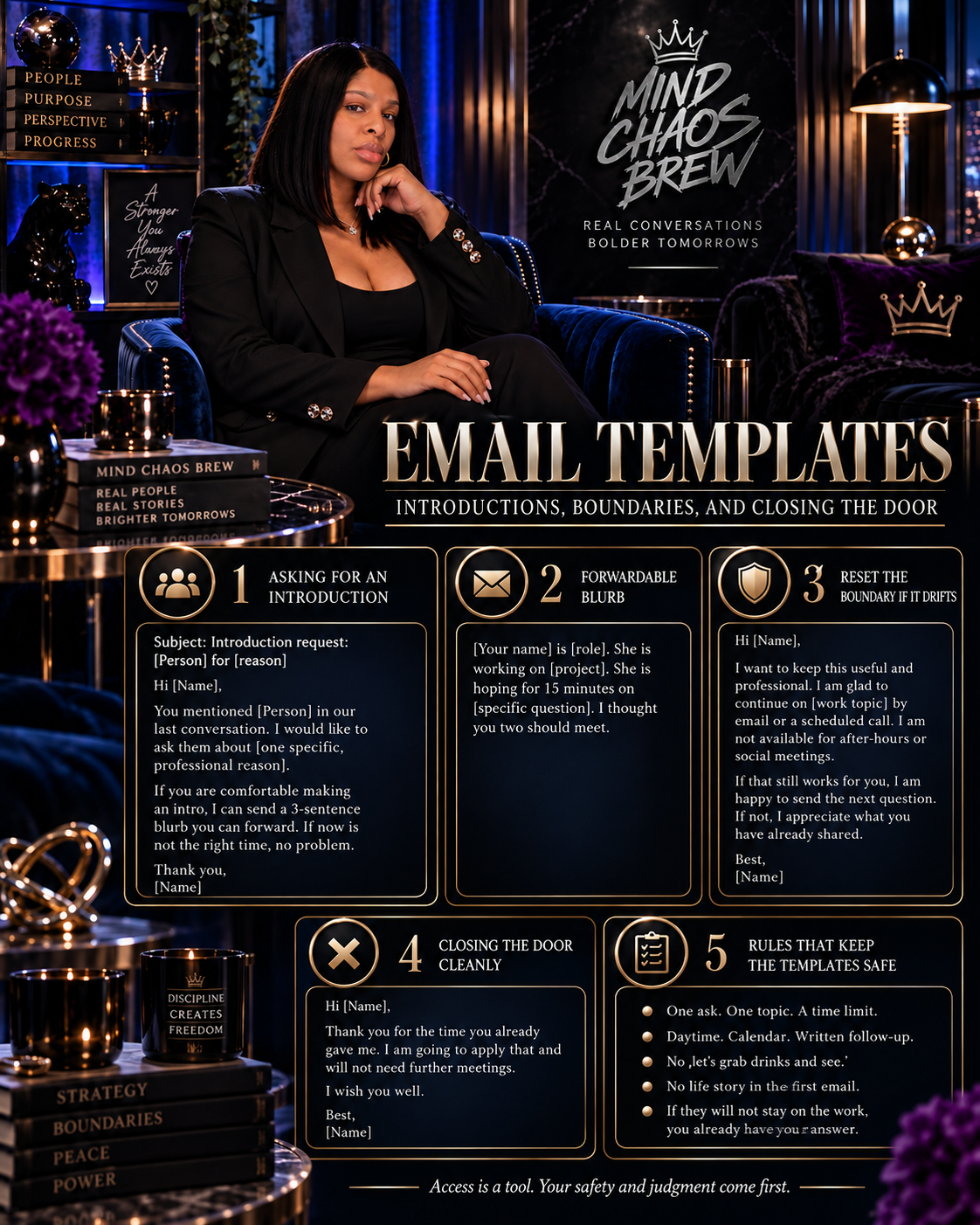
ASKING FOR AN INTRODUCTION
Subject: Introduction request: [Person] for [reason]
Hi [Name],
You mentioned [Person] in our last conversation. I would like to ask them about [one specific, professional reason].
If you are comfortable making an introduction, I can send a three-sentence blurb you can forward. If now is not the right time, no problem.
Thank you,
[Name]
FORWARDABLE BLURB
[Your name] is [role]. She is working on [project]. She is hoping for 15 minutes on [specific question]. I thought you two should meet.
RESET THE BOUNDARY IF IT DRIFTS
Hi [Name],
I want to keep this useful and professional. I am glad to continue on [work topic] by email or a scheduled call. I am not available for after-hours or social meetings.
If that still works for you, I am happy to send the next question. If not, I appreciate what you have already shared.
Best,
[Name]
CLOSING THE DOOR CLEANLY
Hi [Name],
Thank you for the time you already gave me. I am going to apply that and will not need further meetings.
I wish you well.
Best,
[Name]
RULES THAT KEEP YOU SAFE WITHOUT MAKING YOU SMALL
Keep the ask specific. Keep the meeting scheduled. Keep the subject professional. Keep the follow-up in writing. Keep more than one source of advice. Keep your personal information personal. Keep your own copies of the work, the credits, and the promises. Keep the right to leave without explaining yourself into exhaustion.
Safety does not require shrinking. Boundaries do not make you ungrateful. Discernment is not paranoia. You are allowed to learn from powerful people without giving them ownership of your time, your body, your reputation, or your future.

THE FINAL POUR
The point is not to become untouchable. Nobody is. The point is to become harder to isolate, harder to discredit, and harder to erase.
Build work that travels. Build relationships that survive clarity. Build a record strong enough to speak when a room suddenly develops amnesia. Let mentorship shorten the learning curve, but never let one person become both the door and the key.
Visibility can introduce you. Ownership, judgment, and disciplined boundaries are what keep you in the room.
Own the frame.
No published comments yet. You can open the conversation.